
Why Movement Can Help with After-School Meltdowns
After school can be one of the hardest parts of the day.
Children arrive home tired, overstimulated, and emotionally full — and it often shows in big feelings, shutdowns, or meltdowns.
This is where movement as regulation can make a real difference.
Movement isn’t just exercise
For many children, movement helps their nervous system settle.
It provides:
- grounding sensory input
- a release for built-up tension
- a way to transition out of school mode
This is especially true for SEND children, but it’s helpful for all children.
That’s why movement often comes before calm.
What after-school regulation can look like
Regulating movement doesn’t need to be complicated.
It might be:
- jumping onto cushions
- pushing hands into a wall
- crawling or rolling on the floor
- riding a bike
- or going for a short walk together
For us, bike rides after school have become a gentle reset.
I notice my daughter is more relaxed once we’re home — and evenings feel easier all round.
“My child needs movement to cope — is that okay?”
Yes.
Absolutely.
Some children need movement to regulate after school.
That’s not a problem — it’s information.
Responding to that need can help children feel calmer, safer, and more themselves.
Supporting regulation at Roarsome Sport
In my sessions, movement is never just about sport.
It’s about:
- supporting regulation
- offering familiarity and repetition
- creating environments where children feel safe enough to try
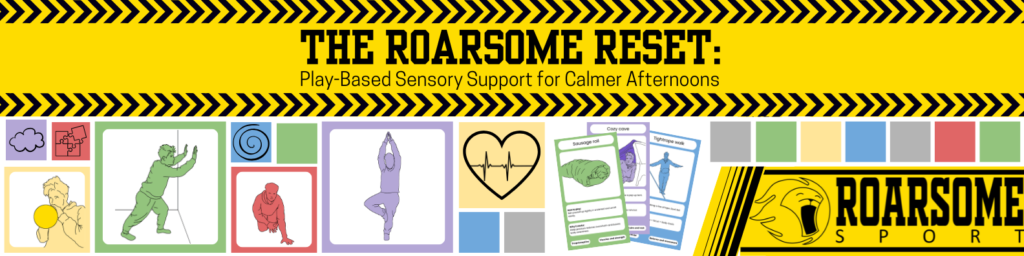
I’ve brought these ideas together in Roarsome Reset — a free resource designed to support after-school regulation with realistic, everyday movement ideas.
👉 Click the link here to download Roarsome Reset
Movement isn’t just something extra.
For many children, it’s exactly what they need.