
When we talk about children being active, the focus is usually on the children themselves. Are they getting enough exercise? Do they enjoy sport? Are they spending too much time on screens?
But there is another factor that often gets overlooked: the experiences we had as children.
Many of us carry strong memories of sport and PE from our school years. For some people those memories are positive. They remember belonging to a team, developing skills and feeling confident in their abilities. For others, the memories are less positive. They remember being picked last, feeling self-conscious or deciding at a young age that they simply weren’t “sporty”.
I often feel like I sit somewhere in the middle.
I never hated PE and I wasn’t actively put off sport, but I wasn’t one of the naturally talented children either. I was fairly average, never really found a sport that felt like my thing, and as I got older the focus seemed to shift more towards exams and academic success. Like many teenagers, sport gradually became less important and eventually disappeared from my life.
It wasn’t until my twenties that I started discovering movement I genuinely enjoyed. What began with a few exercise classes at university eventually led to cycling, walking, climbing, orienteering and, somewhat unexpectedly, unicycle hockey.
When I look back at that list, none of those activities were sports I was introduced to at school. In fact, for a long time traditional sports clubs felt quite intimidating. I always assumed they were for the children who had been playing since primary school, knew all the rules and were naturally good at it. Whether that perception was accurate or not, it was enough to stop me getting involved.
I suspect many adults carry similar stories.
Perhaps you loved sport growing up and have continued to stay active throughout your life. Perhaps you had a negative experience and have avoided it ever since. Or perhaps, like me, you simply never found the activity that suited you until much later.
The important thing is recognising that these experiences don’t always stay in childhood.
As parents, our own relationship with movement can influence the opportunities we create for our children. If we feel uncomfortable in sporting environments, we may be less likely to seek them out. If we believe sport is only for naturally talented children, we may hesitate to encourage our children to try something new when they struggle. And because mums are often the people researching activities, making bookings and driving children to clubs, those experiences can have a bigger impact than we realise.
This is one of the reasons I am so passionate about creating positive sporting experiences for children.
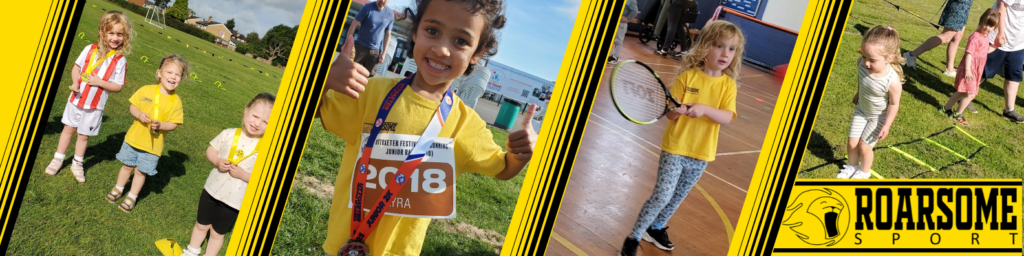
At Roarsome Sport, the goal isn’t to identify the most talented children or produce elite athletes. It’s to help children build confidence, develop physical skills and discover that being active can be enjoyable. We celebrate effort, perseverance and trying something new because those qualities are available to every child, regardless of their natural ability.
Not every child will grow up to play competitive sport, and that’s absolutely fine. What matters is that they leave childhood believing movement is something they can enjoy, rather than something they need to be good at.
Because when children have positive experiences of movement early on, they’re more likely to carry those experiences with them into adulthood. And unlike many of the stories our generation grew up with, that’s a story worth passing on.