
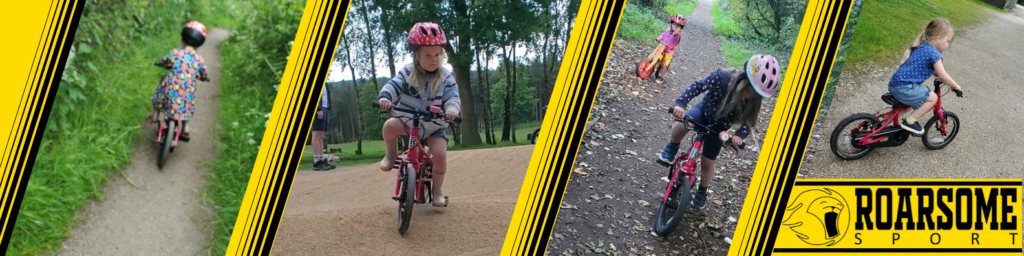
With the evenings getting lighter, I’ve found myself heading to the park more after school. A bit of fresh air, a climb on the equipment, a quick ride round the pump track — nothing complicated.
But I’m always reminded how much it shifts the mood of the whole evening.
Children are designed to move. And very often, movement is how they communicate.
We tend to think of communication as words. Clear sentences. Explanations. But children — especially younger children, and many SEND children — communicate first through their bodies.
A child who crashes into cushions or constantly jumps might be seeking deep pressure. A child who spins or runs might be trying to regulate an unsettled nervous system. A child who withdraws might be overwhelmed.
When we start looking at behaviour through that lens, things feel different.
This week in school, I asked a class to pair up with the same partners as before. One boy came over and told me he didn’t want to work with his partner because they sometimes “mess about” together.
He wasn’t being awkward. He was communicating uncertainty.
We had a quiet conversation. I reminded him that they’d worked well earlier. I told him I thought they could do it again. A quick fist bump, a bit of shared confidence, and off they went.
They worked brilliantly.
That moment didn’t require a consequence chart or a long explanation. It needed connection.
In schools, and at home, it’s easy to focus on the surface behaviour. But underneath there is usually a nervous system trying to cope.
This doesn’t mean there are no boundaries. It doesn’t mean children don’t need guidance. It simply means that regulation comes before reasoning.
When children feel safe and understood, cooperation becomes much more likely.
As we move into spring and children naturally feel more energetic, it’s a helpful reminder: movement isn’t the enemy of learning. Often, it’s the foundation of it.