
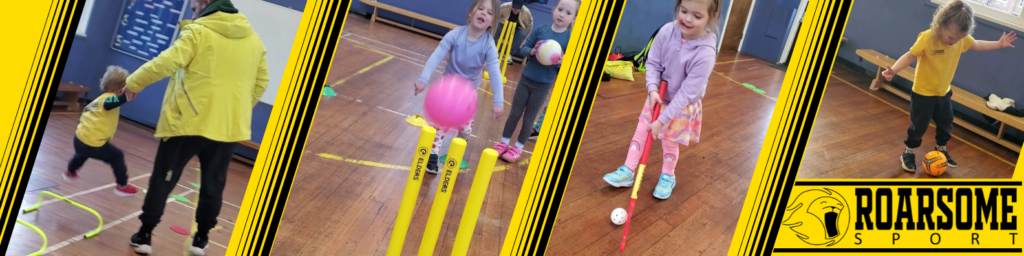
Starting a new class with your child can feel like a big step.
You’re walking into a new environment, there are new faces, new routines, and you’re not quite sure how your child is going to respond. For a lot of parents, there’s a mix of excitement and nerves before that first session even begins.
And then you arrive.
Some children will run straight in and get stuck into whatever is set up. Others will stay close to you, take everything in, and hold back a little.
Both of those responses are completely normal.
From the outside, it can feel like the goal of that first session is to get your child fully involved as quickly as possible. But in reality, that’s not what matters most.
What matters is how your child feels in that space.
When a child walks into a new environment, they’re taking in a huge amount of information. Who’s here, what’s happening, how loud it is, what’s expected of them, and whether it feels safe enough to have a go.
Until they feel comfortable, they’re not really in a position to engage fully.
That’s why the first session is often more about settling than it is about participation.
In my sessions, I expect a mix of responses. Some children will join in straight away, while others might watch, stay close to their grown up, or take part in small moments before stepping back again.
A big part of my role is to support that transition.
That might mean adjusting how I approach a child, giving them space rather than direct encouragement, or creating opportunities for them to explore in a quieter or less pressured way.
It’s not about getting them to do everything straight away, it’s about helping them feel comfortable enough to start.
Over the following weeks, you often see that shift happen gradually. A child who stayed close at the start begins to move further away, tries an activity, and then slowly builds up their involvement.
Because that confidence has been built in their own time, it tends to be more secure and longer lasting.
For parents, it can help to go into that first session with a slightly different expectation. Instead of looking for full participation straight away, look for small signs that your child is settling.
Are they watching with interest?
Are they moving a little further into the space?
Are they willing to try something, even briefly?
Those are the early steps.
Starting something new doesn’t always feel easy, and it doesn’t need to. When children are given the time and space to adjust, they’re much more likely to enjoy it and keep coming back.
And that’s where the real progress begins.