
One of the things I’ve been thinking about recently is how much children learn from watching the adults around them.
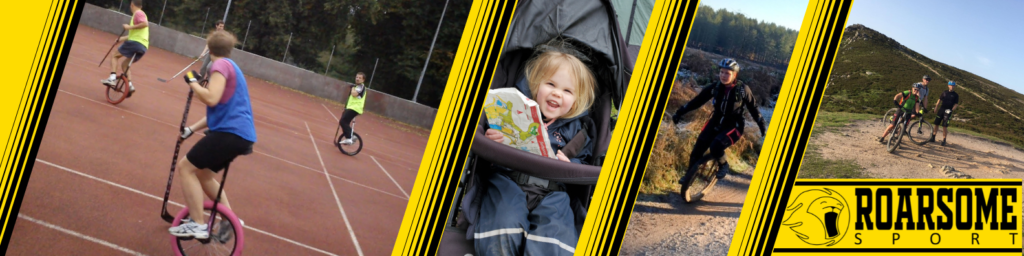
In our house, Daddy has his hockey night, I have my unicycle hockey night, and our daughters have become very familiar with the routine. At the moment we’re firmly in the “why?” phase of parenting, so there are plenty of questions whenever one of us gets our sports kit out.
Why are you going? Why do you play hockey? Why can’t you stay at home?
The answers vary, but they usually include things like exercise, friendship, enjoyment and having time to do something we love. More than anything though, I hope our girls are learning that movement isn’t something you do because you have to. It’s something you can choose to do because it makes your life better.
As adults, we often tell children that being active is important, but children pay much more attention to what we do than what we say. If they see us walking, cycling, gardening, dancing in the kitchen or heading out to a sports club, they’re learning that movement is a normal part of life. That doesn’t mean parents need to become marathon runners or spend hours in the gym. It simply means letting children see that movement has value beyond childhood.
Recently, I was reminded that modelling isn’t the only way children learn from us.
At the specialist school where I teach PE, I arrived early and spent some time with a pupil who was playing with a collection of Gruffalo toys. We sat together looking at the characters, talking about the Gruffalo’s knobbly knees and comparing them to our own. I started reciting bits of the story that I could remember and before long we were matching finger puppets to soft toys and sharing the experience together.
At one point I picked up the snake finger puppet and made a hissing sound. The little boy picked up the matching snake toy and responded with his own “sss” sound. Afterwards, one of the teaching assistants told me it was the first time she had heard him make that particular phonic sound.
It was a lovely moment, but what struck me most was how it happened. There wasn’t a carefully planned intervention or a specific target I was trying to achieve. We were simply sharing something he was interested in and building a connection.
I think as parents, teachers and coaches, we can sometimes become very focused on progress. We want children to learn new skills, become more confident, communicate more, move more and achieve more. Those things are all important, but they rarely happen without engagement first.
Children are far more likely to learn when they feel understood. They’re more likely to take risks when they trust the adults around them. They’re more likely to join in when they feel safe and valued. Whether we’re supporting communication, confidence or physical development, relationships are often the foundation that everything else is built on.
It’s something I see in sport all the time too. The children who thrive aren’t always the ones who pick up skills most quickly. More often, they’re the children who feel comfortable enough to have a go, make mistakes and keep trying.
That’s why I think the small things matter so much. Playing sport ourselves. Showing enthusiasm. Joining in. Taking an interest in what interests them. Building relationships before expecting results.
Those moments don’t always feel significant at the time, but they create the foundations for confidence, learning and enjoyment. Before children can make progress, they need to feel connected. And before they develop a lifelong relationship with movement, they need to see that the adults around them value it too.