
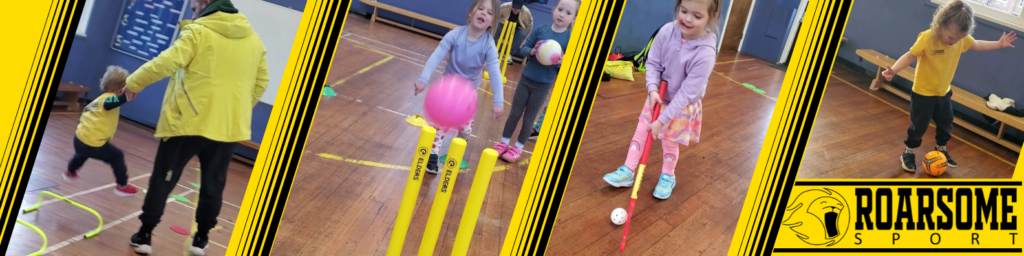
When people think about children’s sport, it’s easy to focus on the physical skills.
Can they throw accurately? Can they balance? Can they run faster than they could a few months ago?
Those skills are important, but they’re not the reason I believe sport matters.
What excites me most is watching children discover what they’re capable of.
In almost every session, there are moments when children face a challenge that feels difficult. It might be balancing on a beam, throwing towards a target or trying a completely new skill for the first time. Often they aren’t successful immediately. Sometimes they wobble, miss or need several attempts before things start to click.
Those moments are incredibly valuable.
Each time a child keeps going despite finding something difficult, they’re learning more than a physical skill. They’re learning that mistakes are part of learning and that progress doesn’t happen instantly. Most importantly, they’re learning that they can cope with challenge.
Over time, these small experiences help children develop trust in their own bodies.
They learn that their body can run, jump, balance, throw, catch and climb. They learn that skills improve with practice. They learn that being unable to do something today doesn’t mean they’ll never be able to do it.
That kind of body trust is especially important as children grow older.
Many children, particularly girls, begin to receive messages about how their bodies look. Sport offers a different conversation. It shifts the focus away from appearance and towards capability. Instead of asking, “What does my body look like?” children begin to ask, “What can my body do?”
It’s one of the reasons I believe movement should feel joyful rather than something to be judged. When children are free to explore, make mistakes and celebrate progress, they develop a healthier relationship with movement. They become more willing to try new things and less afraid of getting things wrong.
The goal isn’t to produce perfect technique or exceptional athletes.
The goal is to help children leave with confidence in themselves, trust in their bodies and the knowledge that they are capable of learning new skills.